Dunhill Profiles: Vasily Petrenko

              Conducting is an art of paradox. It demands precision and imagination, command and humility, fidelity to tradition and an openness to reinvention. Few embody that balance with greater poise than Vasily Petrenko, Music Director of the Royal Philharmonic Orchestra since 2021. Born in St Petersburg and shaped by the formidable discipline of the Capella Boys Music School, Petrenko’s journey has taken him from Soviet Russia to the great stages of Europe, America and beyond. His performances are celebrated for their clarity and drive, but what defines him most is an insatiable curiosity – the desire to make each work, however familiar, speak anew.
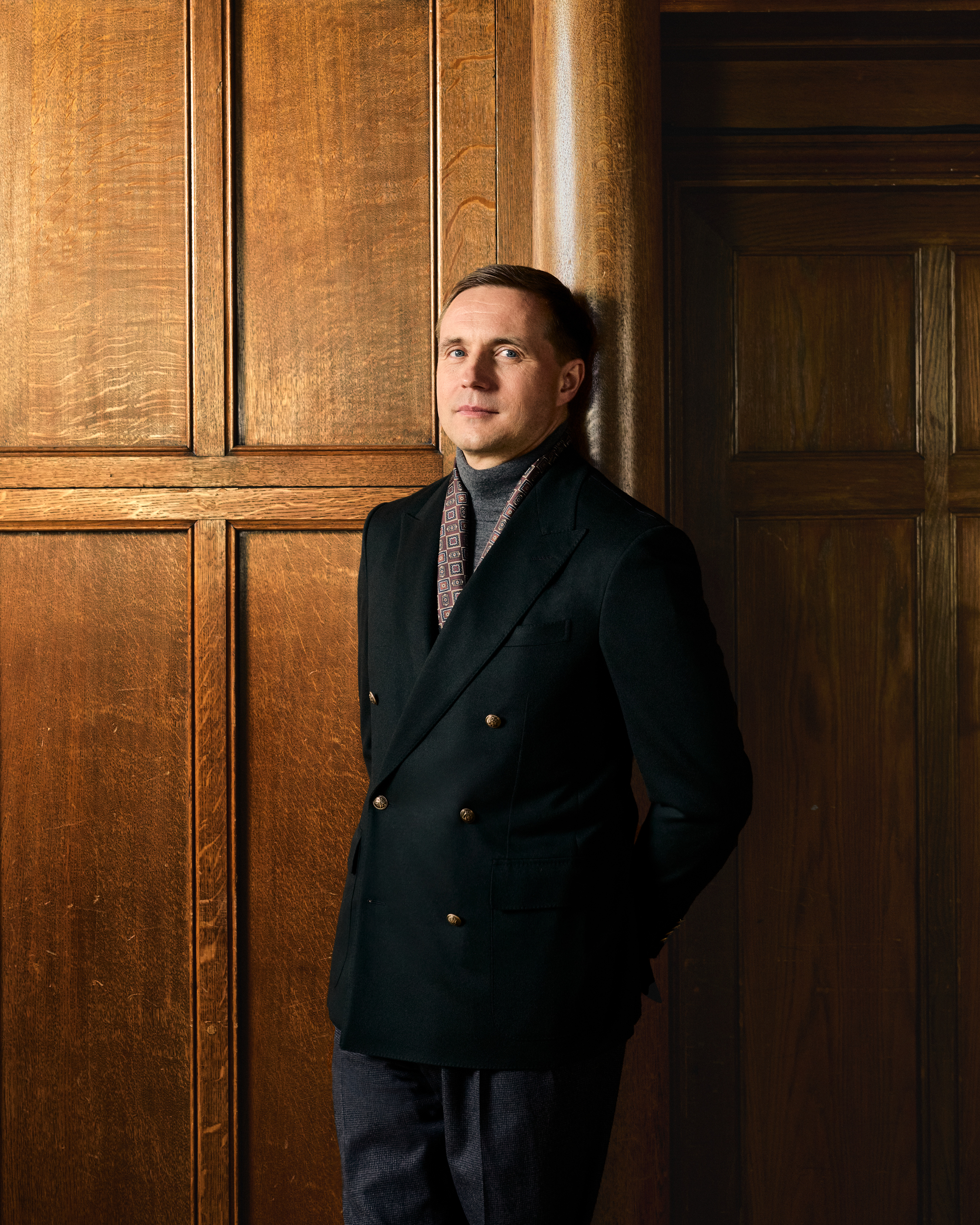
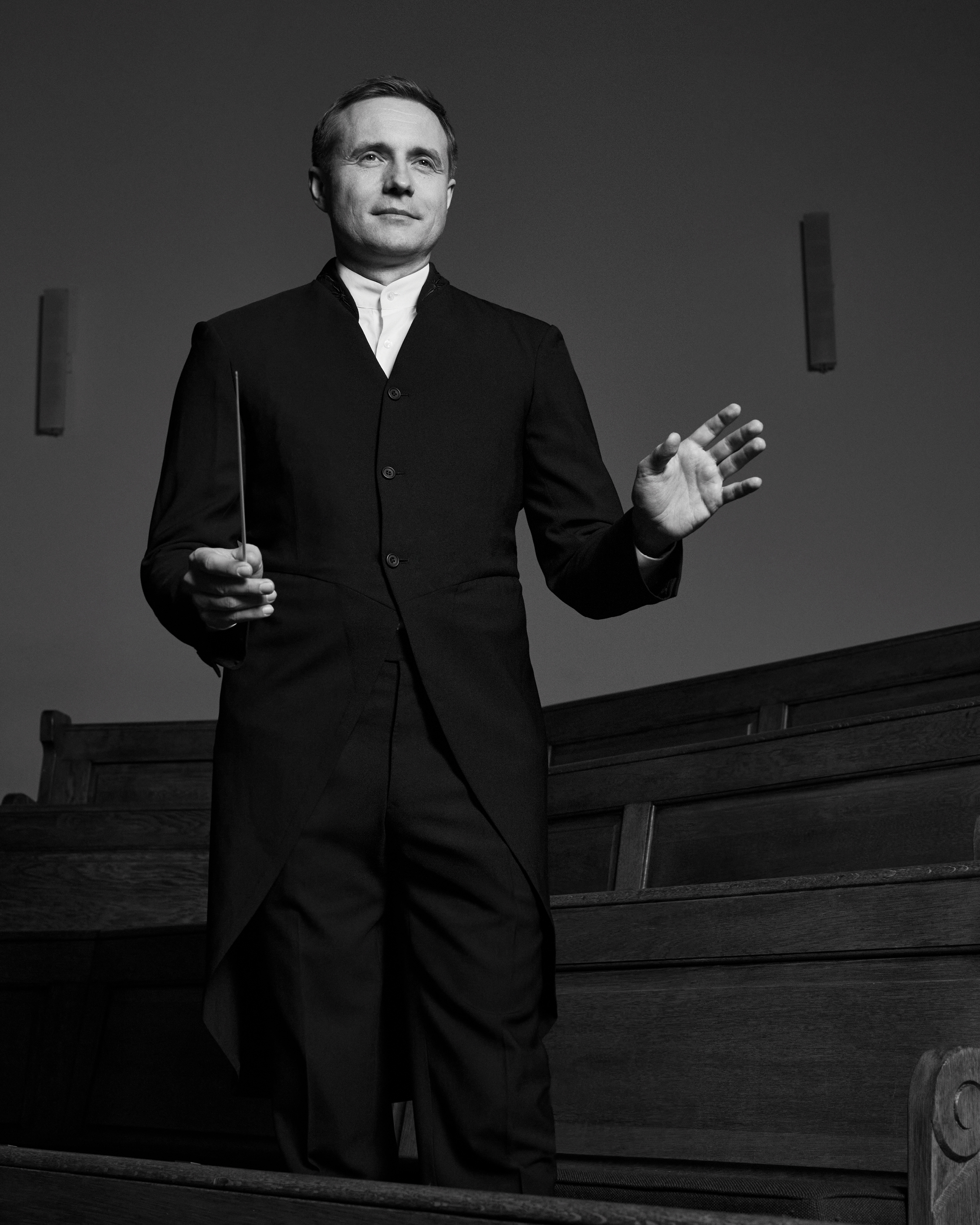
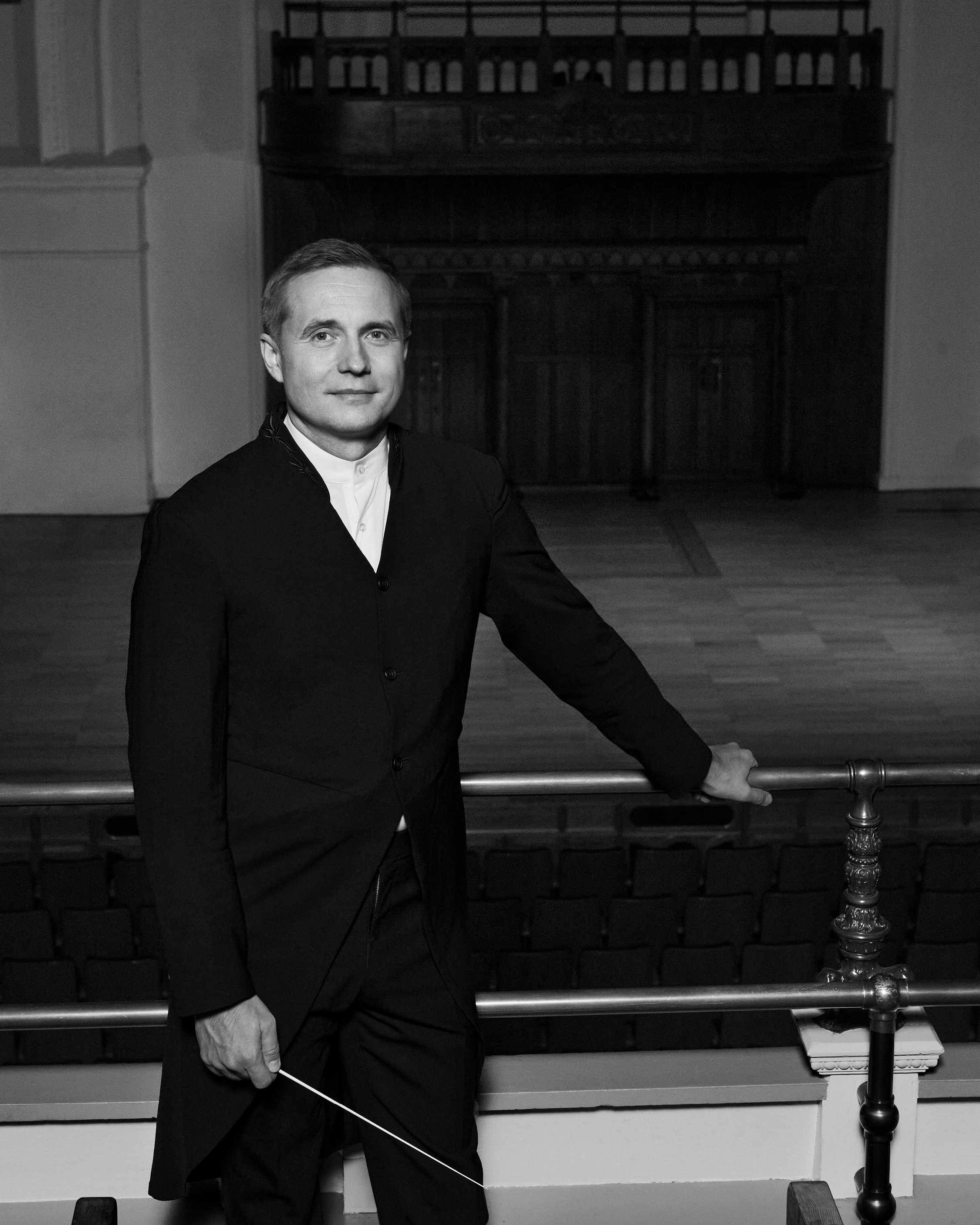
At Bourdon House, the historic home of dunhill, Petrenko paused between rehearsals to be measured for a bespoke suit crafted for the podium. “We made Vasily a black fresco dress tails and trousers,” explains the House senior bespoke cutter. “The collar was embroidered black on black with an edelweiss flower as a nod to the Mahler season the RPO are celebrating.” Cut for movement as much as ceremony, the coat is “unstructured and unlined to make it as light to conduct in as physically possible,” with a stand collar, cutaway front, high armholes and a gun-pleated back. Amid polished wood and tailoring cloths, Petrenko spoke of discipline and partnership, of the psychology of leadership, and of music’s enduring ability to ask the essential questions of humanity.

You’ve conducted some of the world’s most prestigious orchestras. What first drew you to a life in music?

“It was my mum. She brought me at the age of three to the House of Pioneers. They listened to me and said, ‘This boy has no music skills.’ And I think then my mum wanted revenge.

Two years later she brought me to the most prestigious music school, not just in Leningrad, but probably in the whole Soviet Union, the Boys Capella School. The competition was huge - 400 boys for 25 seats. By the end, only eight or nine could finish. I made it all the way through.

I was always interested in various instruments, because voice is just a single instrument. I was curious how it all works together, how you can make it into an orchestra. So in parallel, I studied conducting. But why music in the beginning? Probably because of the revenge of my mum.”

How would you describe the role of a conductor today?

“Most people think conductors are just there for visual entertainment. But imagine you and ten people need to say ‘ah’ together. Without a conductor, how would you do it? Now imagine each of you must say it at different dynamics, lengths, and pitches - it becomes impossible.

Music is like Shakespeare’s Romeo and Juliet: the text is written long before we were born, and the conductor must translate that text into sound. When you read a score, you hear every instrument in your mind. With your hands you try to implement that inner sound into real life, and then adjust constantly, because musicians are real people with their own ideas. It’s complex work - three dimensions happening at once: hearing it, translating it, and correcting it.

And what you see in concert is just the tip of the iceberg. Beneath it lies days of rehearsal, refining details to get as close as possible to the score. On top of that is the psychology. Conductors used to be dictators - Toscanini was notorious. Today it is different: we are partners. My role is to help musicians release their best qualities, to create a positive atmosphere in a group of a hundred individuals, some of whom may have sat next to the same desk partner for thirty years. It is leadership, but shared leadership.”

You became Music Director of the Royal Philharmonic Orchestra in 2021. What does this new season represent for you and for the orchestra?

“Every new season for me represents the next stage in the orchestra’s life. This year we go again into other territories. Tomorrow we start a tour in Italy, Austria, Switzerland, and Germany. Later we have American tours, mainly the East Coast, and then the Far East.

It is the next stage for the orchestra, to show its excellence to the world. But we should not forget the people of London, because that’s our core audience. The season is for all tastes, starting from the Proms every September, to concerts at Festival Hall, Royal Albert Hall, and Cadogan Hall.”

This season spans both beloved repertoire and new works. How do you approach balancing tradition with innovation?

“It’s like food. If you eat only sweets, you’ll be sick. If you eat only salty things, you’ll be sick. A good diet brings variety, and the same with your soul.

We do masterpieces, and we do less-known pieces. We do Vaughan Williams’ London Symphony at the Proms, Sibelius’ Second Symphony, Strauss, modern music. Everyone can find something interesting. It’s not just blockbusters. It’s the duty of a music director to bring variety and to give new music a chance.”

Both dunhill and the RPO share a respect for heritage while embracing modernity. How do you see those values reflected in orchestral music?

“This is what classical music is about - heritage and modernity. Many people think of classical art as something from the deep past. But it asks eternal questions.

I just conducted Stravinsky’s Symphony in C. It was written during his last emigration in 1938. Each movement was written in a different country - France, the US, Hollywood. He knew the war was coming. The piece asks: do we really need it? Where are we heading? What moral principles do we have? How does money prevail over life?

These are the same questions we should ask now. Every big piece of art has something relevant for today.”

What does the Royal Albert Hall mean to you as a performer?

“It was the first hall I performed in in the UK, probably 1988 or 1989, when I was in the boys’ choir. We sang Russian Orthodox music. I still have memories from that time.

Since then I’ve been there many times. It’s like a Colosseum for classical music. The Proms make it the largest festival in the world, but it has hosted everything - films, horse racing, even boxing. For musicians, to perform there is like going to Maracanã or Santiago Bernabéu in football.”

Conducting is as much physical as it is artistic. How do you prepare yourself before stepping onto the podium?

“Physically, I swim every morning and try to keep active, not like a professional athlete, but enough to be well.

Mentally, I don’t spend hours scrolling on social media. My time is too valuable. I use it to connect with friends, not to waste it.

Before a concert, I need calmness and silence. No rituals, but I usually iron my concert dress myself. That calms me down, and it ensures I’m not disturbed.”